
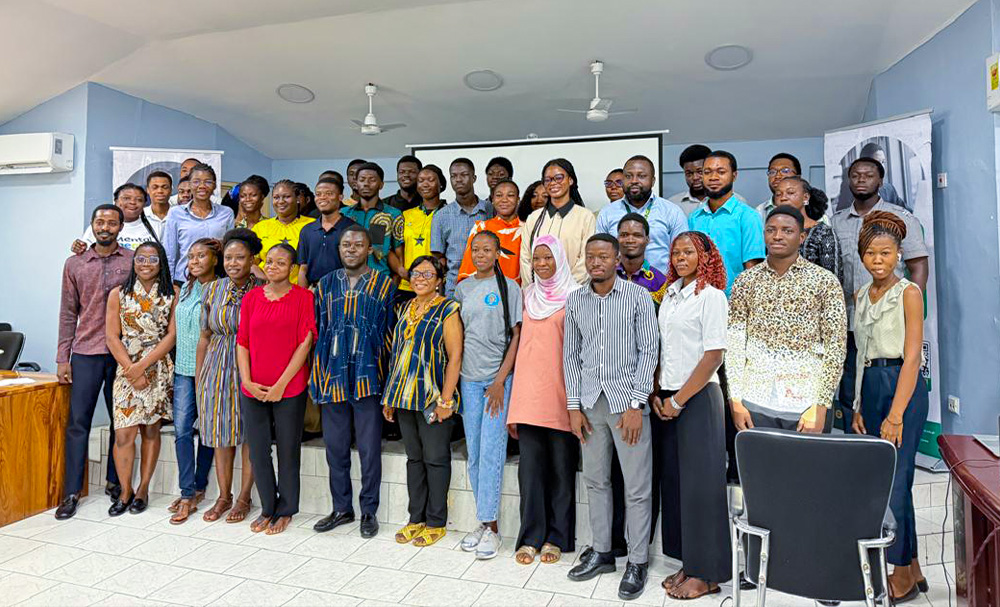
The Career Services Centre of the Kwame Nkrumah University of Science and Technology, Kumasi has organised a capacity-building training session for National Service Personnel (NSPs) at the Directorate of Students Affairs (DoSA), aimed at equipping them with essential professional, career development and workplace skills to enhance their effectiveness during their service period.
The session focused on strengthening the competencies of the NSPs through practical guidance on workplace communication, professional conduct and career preparedness. It also provided participants with tools to navigate career opportunities beyond their national service.

Mr. Kingsley Snr. Sarpong Abeyie, District Accounts Officer at Eliho Touton Ghana Limited, encouraged the NSPs to begin preparing for employment opportunities ahead of completing the National Service Scheme.
He noted that thousands of graduates enter the labour market each year, yet only a small proportion secure employment shortly after completing national service.
“Every year, thousands of graduates are produced from universities, but only a small percentage secure employment within a short period,” he said. “This means students must begin preparing themselves early and develop the right skills to stand out.”
According to him, relying solely on academic qualifications is no longer enough to guarantee employment. He stressed that graduates must learn how to communicate their strengths and persuade employers of their value.
“Sometimes we say we have a degree in this or that, but that alone is not enough,” he explained. “You must be able to convince an employer why you are the right person for the job.”
Mr. Abeyie advised participants to research organisations they intend to work for and tailor their applications accordingly. He emphasised that understanding a company’s operations and expectations could significantly improve a graduate’s chances during recruitment.
“You must know the companies you are applying to and understand what they expect from you,” he said. “When you go for an interview, you should be able to show clearly what you can offer.”
He further encouraged participants to develop resilience as they transition from school into the professional world, noting that the process of securing employment can be challenging and sometimes discouraging.
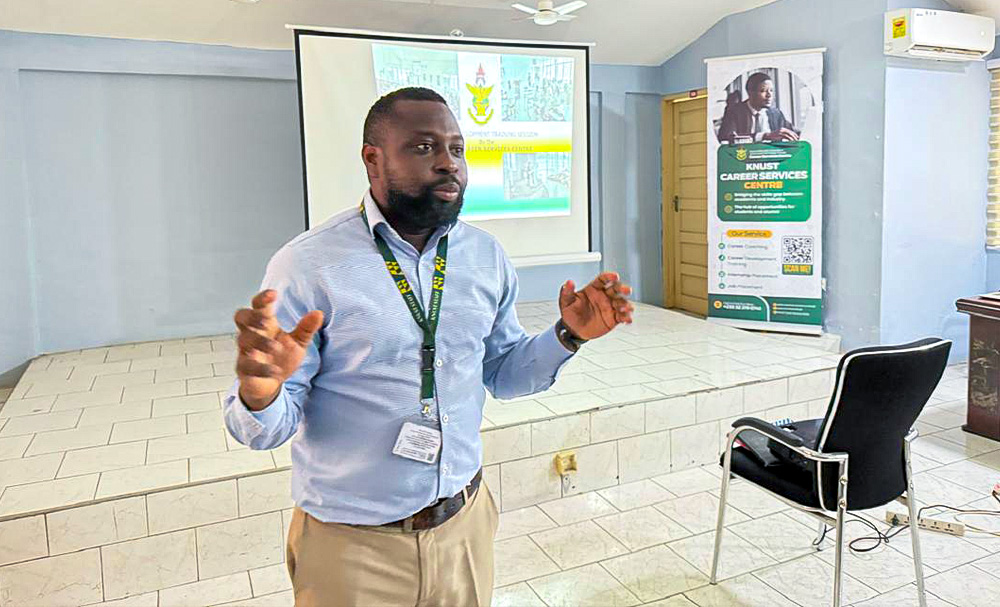
Mr. Lord Abeeku Nkansah, Contract Administrative Assistant at the Directorate of Students Affairs, highlighted the importance of maintaining professional documents such as the curriculum vitae (CV) and encouraged participants to actively engage in discussions and share ideas to enrich their learning experience.
Mr. Nkansah explained that a CV captures an individual’s qualifications, skills, experiences and achievements.
“Your CV summarises your education, skills, abilities, achievements and references. It tells your professional story and helps employers understand what you can offer,” he said.
He noted that NSPs should regularly update their CVs to reflect new experiences and skills gained during their national service.
Mr. Nkansah also advised that a CV should not be treated as a generic document used for every application. Instead, it should be carefully tailored to match the specific requirements of the opportunity being pursued.
“You cannot use one CV for every job application,” he emphasised. “Each opportunity has different expectations, and your CV should highlight the experiences and skills that are most relevant to that particular role.”

Mrs. Selina Angmor Doe, Director of the KNUST Career Services Centre, emphasised that interviews are designed to assess not only a candidate’s qualifications but also their preparedness, communication skills and ability to respond under pressure.
According to her, some employers may deliberately create stressful situations during interviews to observe how applicants react.
“Sometimes interviewers create pressure intentionally to see how you respond,” she explained. “They want to know whether you can remain calm and professional even in challenging situations.”
She further encouraged NSPs to prepare clear responses to common interview questions, particularly the frequently asked prompt, “Tell us about yourself.”
“If you struggle to answer ‘Tell me about yourself,’ it shows that you did not prepare,” she said. “That question is one you should always be ready for because it allows you to present your education, experience and strengths that relate directly to the job.”
Mrs. Doe urged participants to research the organisations they apply to and align their responses with the institution’s goals, values and expectations.
She stressed that NSPs should remain authentic during interviews while demonstrating confidence, passion and readiness to contribute effectively in the workplace.
“Preparation is key,” she emphasised. “When you understand the role, know your strengths, and communicate them clearly, you greatly improve your chances of success.”
Story | Photos: Alice Laura Kyerewaah Prempeh and Akosua Konadu Bandoh.


